Things You May Find In My Literary Wanderings

classics (4) love (3) austen (2) bronte (2) dead (2) great (2) jane eyre (2) money (2) zombie (2) Puzzle (1) Serious Injuries (1) Strether (1) Torture (1) alcohol (1) books (1) boxing (1) bullfighting (1) capitalism (1) challenge (1) character (1) city (1) corruption (1) coupe (1) crap (1) dirty (1) dream (1) ender (1) factory (1) fishing (1) fitzgerald (1) gatsby (1) heaven (1) hegemon (1) hemingway (1) industrial (1) jealousy (1) journal (1) juxtaposition (1) lusitania (1) misunderstandings (1) ninja (1) north (1) paris (1) piggies (1) queen (1) rises (1) shambler (1) siren (1) sisters (1) snob (1) society (1) south (1) spain (1) speaker (1) sun (1) tenant (1) trees (1) valentine (1) violence (1) vyrus (1) weeks (1) wildfell (1) xenologer (1)

24 February 2010

That's Why They Call Him Great

This is the second time I've read The Great Gatsby by F. Scott Fitzgerald. The first time I read it for a class with a teacher who made it as dull as humanly possible. The answer to every question was "the American dream," and she actually read us the entire novel out loud in class. Note for all future teachers: If you would like to make students hate a novel, follow her example.
This time, I read the novel at my own pace, in my own head, and loved every word of it. The surface action of the novel is fantastic. It's got it all, New York City, gangsters, flashy cars, big parties...I mean, this is why we read about the jazz age, right? But underneath that there's this haunting, terrible story.
I love it when books tell two stories at once, and that seems to be present in spades here. Not that there are two plots, but the story that the action follows and the story that is implied by the narrative are vastly different. The second story is really what you learn without being told.
Great.


Oh, and that's number nine, folks.

coming soon: Great Expectations by Charles Dickens, Emma by Jane Austen

Fiesta


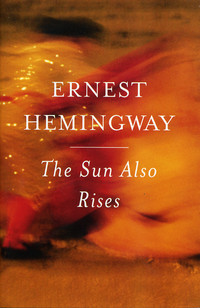
I've always been a little bit nervous when it comes to Hemingway. His clipped prose is so easy to read that I find I have to read entire novels repeatedly to get at the bits that he doesn't quite say. That said, this is a first reading of The Sun Also Rises. I really liked this novel. I loved Brett Ashley's character especially. She's wild, beautiful and a little bit heartless. It's a great combination. The way that the novel is written makes me want to write in Paris, and go fishing in Burguete. But the real gem of this novel is the festival of San Fermin. The setting is a thrilling place to set the most dramatic part of his novel, as Hemingway does by placing already hostile characters in a crowded, hot, violent setting. I love it.


coming soon: The Great Gatsby by F. Scott Fitzgerald, Emma by Jane Austen, Great Expectations by Charles Dickens

17 February 2010

Zombies again.


I couldn't help it. As soon as I saw something about zombies in the blurb, I was sold. This was a quick, very quick read. I started reading it in bite-sized pieces before bed. This morning, I woke up, hit school and read all through my classes. It was a good book. The main character is your normal tough guy protagonist, except he's a vampire and he gets his ass handed to him on a platter about 5 times in the novel. Which is fine with me. There was one part I didn't find too creative. You remember in the old Batman tv show how the bad guy would always tell the good guy his whole evil plan before killing him? Did that ever work or was it just lazy writing? I believe the latter. A good author can find a better way to tell readers the motivations of the bad-guys, or they can leave us guessing. Outright telling a reader is kind of insulting.

I did really like the book, though. I don't read much for mystery-ish-vampirey-stuff, but I picture it as being pretty close to the top of the heap. I did read the Anne Rice novels in middle school, but that was a completely different cup of tea. The vampires/zombies in this one are infected with a mysterious virus. It's not groundbreaking, but it was a breath of fresh air.

Well, short book, short review. This one wasn't on my "coming soon" list, because I didn't think I'd finish it so soon, but there it is :)

Coming soon: Great Expectations by Charles Dickens, The Sun Also Rises by Ernest Hemingway, Emma by Jane Austen, The Great Gatsby by F. Scott Fitzgerald

16 February 2010

Frosty Passion from Across the Pond


As you can probably tell, I've just finished reading North and South by Elizabeth Gaskell. This is the first book I've read by her, and it was a little refreshing to be stuck in a smoky, dirty city after all of the natural uptopias that I'd glutted myself on in recent reads. I really enjoyed this one.

Margaret Hale can be a hard character to bite into. She's a little too high-and-mighty to really identify with for the most part. Her redeeming graces are the 1 (one) lie she tells in the entire novel, and the fact that she makes some pretty sweet decisions for a Victorian woman. I mean, she's just wild by their standards. My two favorite characters, on the other hand, are John Thornton and Nicholas Higgins (I know, I should identify with women, but women tend to be so one dimensional in these novels!). John Thornton is kind of like my uncle Paul in my mind. He's big and tall and a little bit scary sometimes, but you know he's a good guy, so it works out. Nicholas Higgins is just too good to be true. He's old, gritty, socialist and kind to boot. Both of these characters grow through the duration of the novel, and that's something that I really respect in writing. It's easy to create a consistent character. But to write people who consistently develop within the limits of their character-- that's art.

The storyline was pretty much par for the course: beautiful woman, multiple proposals, rises and falls of fortunes, life, death, birth. All of the good stuff. It wasn't a rip-roaring good time, but the characters really drew me in, as did the settings. Helstone, Margaret's birthplace is a perfect fairy-tale place, and that's dandy.
I found the portrayal of an industrial city to be much more riveting. The fictional city of Milton was modelled off Manchester. It was interesting to encounter the city from Margaret's viewpoint, since she was a higher class character who mingled and wandered through lower-class parts of town. By showing us the city through Margaret's eyes, Gaskell gives the fresh impressions Margaret has, which would not have registered on the mind of a native. Margaret's higher class background makes her hyper-aware of foot-traffic, building styles, and the way "the other half" lives.

I haven't updated in a while, since I've been reading too many books at once and haven't finished any yet. Expect a big pile of reviews in the next few weeks, because I'm nearing the end of a few. Happy reading, and keep those pages turning.

Coming soon: Great Expectations by Charles Dickens, The Sun Also Rises by Ernest Hemingway, Emma by Jane Austen, The Great Gatsby by F. Scott Fitzgerald